My name is Joshua Holman. I live in North Carolina and serve as a small group leader, worship leader, and deacon in my local Baptist church. I was a reader of Timothy’s Catholic Bibles Blog from around 2014 to the time of its shutdown in 2018. Since then, I have been a visitor to this blog; I am a frequent poster on the Catholic Bible Fans group on Facebook. I have been reading the Bible in some form for over 30 years now. I have read many different versions, ranging from the formality of the King James and New Revised Standard versions to the functionality of the New International Version and Good News Bible. Of the versions that I have read, two stand out in particular. They are The Living Bible and the New Living Translation.
The Living Bible
In the 1980s, my late maternal grandfather gave me my first real (i.e., adult-level, non-children’s) Bible. It was a padded green hardcover called The Living Bible (TLB; pictured to the right).
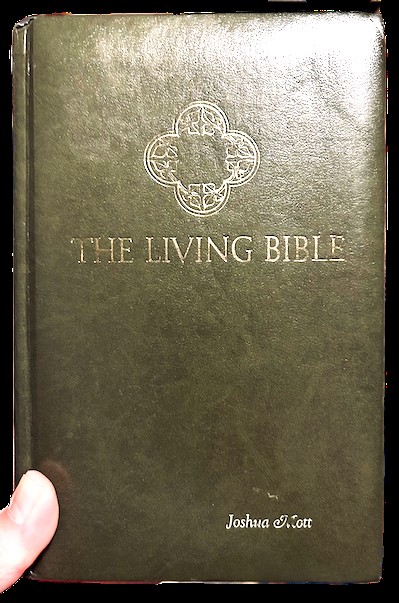
What is the TLB? The TLB was written by Kenneth Taylor. He found that his children didn’t follow the Bible text they used in his family’s devotions. As he travelled to work on the train, Taylor would paraphrase selections for his family and they understood it! In 1962, he started with the Epistles, publishing Living Letters. This volume was a dynamic paraphrase written in the common vernacular, communicating God’s Word to the common person. Its popularity was greatly enhanced by an endorsement by the late Billy Graham. He was recovering in a Hawaii hospital and read it during his recuperation. Graham was so impressed by the paraphrase that he ordered 50,000 copies to be given away on his TV broadcasts in 1972. In paraphrasing the Bible, Taylor used the American Standard Version of 1901. Over the next few years, he finished the Bible, publishing it in portions between 1962 and 1971. The TLB was popular, selling over 40 million copies worldwide. Taylor took the royalties he made from the TLB and gave them to charity. He started a company named after William Tyndale.
The New Living Translation
As the years went on, I started to read everything from the encyclopedia, the newspaper, and various books on John F. Kennedy and his assassination. The Bible was one of these books I read as I moved around with the military. Things started to change in the early 1990s. I realized the Bible was much more than a book on the shelf. I ended up at a Baptist church where I got saved (i.e., had a salvation experience), giving my life to Jesus. After this, I wanted to learn everything I could about the Bible.
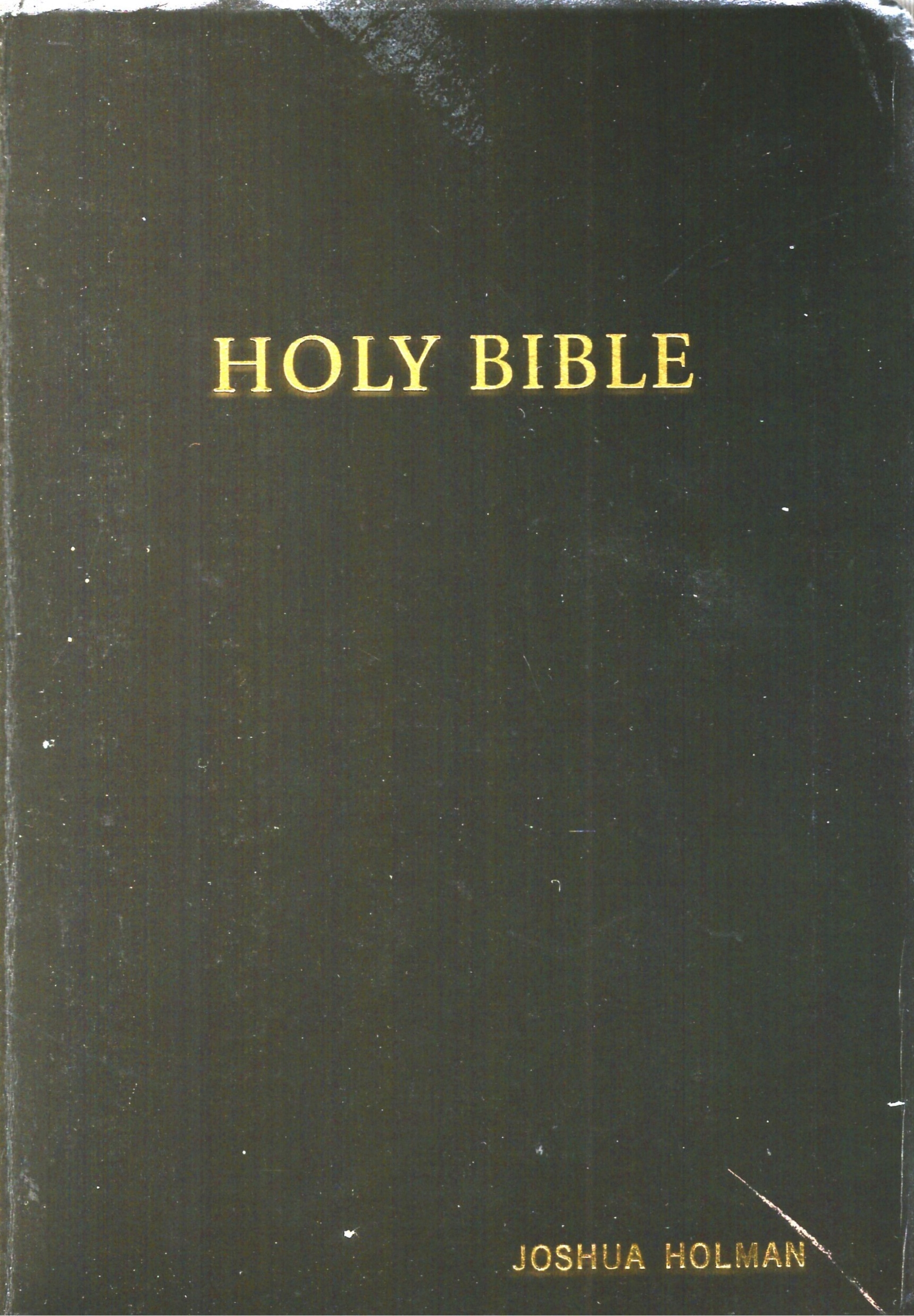
As a part of this effort, I read Christian magazines and found out about a new version called the New Living Translation (NLT). What is the NLT? The NLT is a translation from the Hebrew and Greek texts. Why the need for the NLT? By the late 1980s the TLB was losing sales to the New International Version. Around this time, Tyndale convened a committee to revise the TLB. The committee consisted of 90 evangelical scholars. They worked for seven years, starting in 1989. The NLT was released in July 1996. While Taylor used the American Standard Version of 1901 to produce the TLB, the NLT is a translation from Greek and Hebrew. It seeks to be a functional version that seeks to have the same impact on modern readers that the text had on its original readers. To guard against bias, the NLT was produced by scholars who were experts in a portion of the Bible. When I read this information in late 1996 and early 1997, I was excited. For my 17th birthday, I received a “gift and award” edition of the NLT (pictured to the left).
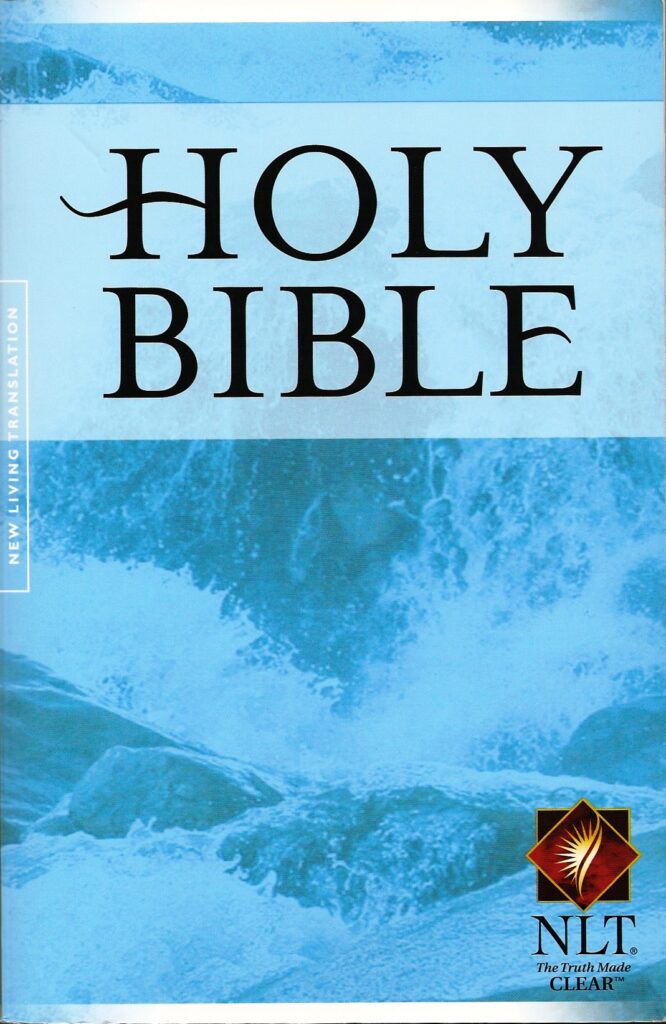
As before, life went on as I moved with the military. I moved on from the NLT, thinking it was just as bad as the TLB (I had moved on from the TLB by this point). I drifted away from church, too. In the early 2000s, I discovered the Bible on the internet. I found out there was a second edition of the NLT. What was the purpose of the project? It was intended to improve the precision and accuracy of the translation. The second edition text (pictured to the right) came out in 2004; further edits between 2007 and 2015 have improved the accuracy of the translation. Eventually I returned to church and an active Christian life. In the years since, I have used the NLT in all facets of the church. I use the NLT for worship services, devotions, teaching, and visiting people as part of my deacon ministry, for the most part.
The Catholic Editions of the TLB and NLT
Up to this point, my experiences have reflected a protestant, Baptist perspective. What about Catholics? While the history of protestant editions is well documented, the history of Catholic editions is the opposite. For the last decade or so, I have been on a quest to learn about the Catholic editions of the TLB and NLT.
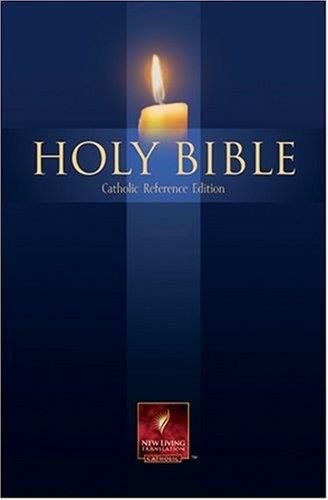
I first saw the Catholic edition of the NLT at a bookstore in 2002 (pictured to the left). This edition contained the 1996 text. As Marc has noted, this edition did not have the imprimatur. A few years ago, I saw a One Year edition of the Catholic edition of the TLB with an imprimatur (pictured below to the right). Until recently, Catholic editions of the TLB and NLT had the deuterocanonicals in a section after Revelation. The title page for January 1st stated that the deuterocanonicals were “paraphrased by [Father] Albert J. Nevins [,] Editor-in-chief and Corporate Vice President [of] Our Sunday Visitor, Inc.” After looking up biographical details on Fr. Nevins, I wrote two contacts, asking what resources he used in paraphrasing the deuterocanonicals. Our Sunday Visitor didn’t respond. I sent a letter to Tyndale, asking them this question.
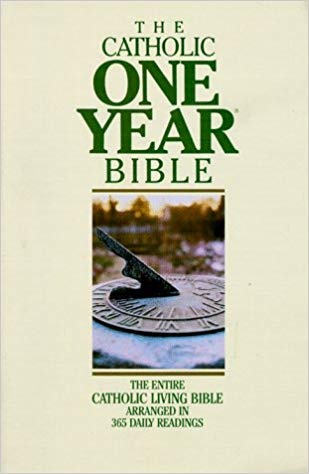
I received a gracious reply from Mark D. Taylor (son of Kenneth). He stated that he didn’t “have any record” of the “base text used by Fr. Nevins”. Mark went on, speculating Fr. Nevins used the 1970 NAB or 1966 RSV-CE. After the NLT-CE was published in India, I sent a tweet to the publisher, asking if the 2002 and 2016 texts were the same or a different translation. They replied, saying that the deuterocanonicals were “a new translation”. As I haven’t found any new information in the last few years, this has to be the final word.
Conclusion
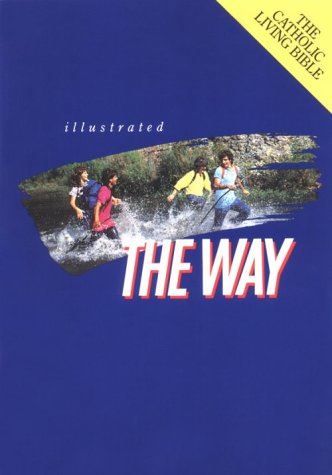
With this being said, a reader may wonder: what editions of the TLB and NLT are the best? For the TLB, I would recommend The Way (pictured below to the left). This is a youth edition of the TLB that was originally released in the 1970s. This edition was reissued in the late 1980s. I saw this edition at a bookstore a few years ago; I regret not getting it. The Way can be found on the Internet Archive; a user can read the Bible with an account.
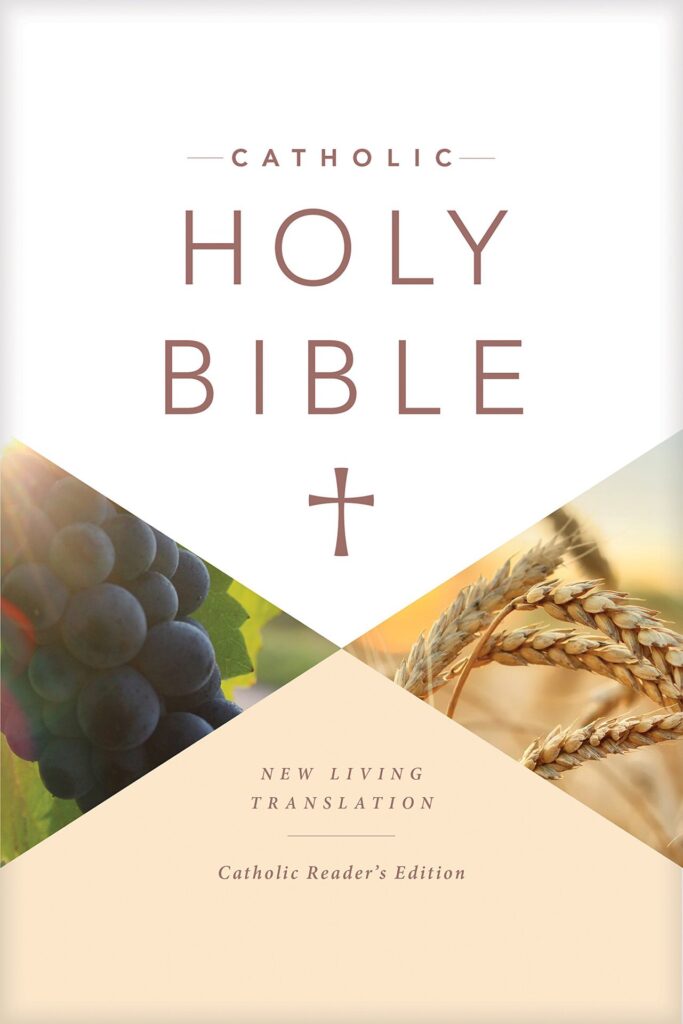
When it comes to the NLT, I recommend the 2017 Readers edition published by Tyndale (pictured to the right). I have the Kindle edition and I read from it. As I conclude this essay, I want to thank Marc for providing a platform for my reminiscences and research. More importantly, I’m thankful to God for providing one of many versions that every part of his church can use.
Thank you for this wonderful post and information. I am an avid reader of the bible and I most enjoy reading different translations.
Joshua, thanks for the interesting article! The 1966 Jerusalem Bible held the field for functional Catholic translations for quite some time – though it’s not nearly as popular as it once was. I actually do recommend the NLT-CE to people as a fantastic contemporary functional translation, and I hope more editions are published. I’d still love to see a CSB published with the Deutercanon….
God be with you.
Fr., I would love to hear more from you about the CSB. I read it quite a bit a few years ago (before I came into the Church), but haven’t picked it up in a while. Other than the missing books, do you have any reservations about the translation from a Catholic point of view?
Joshua, the point of your article that a good paraphrase is a good thing is true. Growing up, I used a Catholic children’s Bible that was a paraphrase, THE CATHOLIC BIBLE IN PICTURES, 1956. I still go back to it and was talking with my son about it tonight. Listening to the priest preach the gospel at the divine liturgy, I go back to that bible and it’s vivid pictures in my mind. It images of Matthew 25 are particularly vivid, and perfect to reminisce on the Sunday of the Last and Fearful Judgment, i.e., Meatfare.
I’ve never read the living bible, but I am a big fan of the NLT and have the catholic edition mentioned above in print and on kindle. I am always confused why other modern translations choose outdated or even archaic vocabulary. O was reading 1 Samuel the other day and theres the phrase Lord of hosts. But when has a modern english speaker ever used host to mean army. Then in 1 samuel 2 I was hit by the hilariously unpoetic phrase ‘the Lord exalts my horn’ I just don’t run into that problem with the NLT. It reads smoothly and really with great emotional depth as well.
I also have their book Daily Walk- 31 days with Jesus. Which is just the gospels highly recommend to anyone wanting to get started on a daily reading habit.
Joshua, I am a deacon in the Catholic Church and want to thank you for an interesting read. It brought back some great memories as I think I was (perhaps still am) a Catholic outlier when it comes to both TLB and the NLT-CE. I came from a non-churched lapsed Catholic family but reverted to the Catholic Faith around age 17 and the first Bible I ever saw/held/read was TLB in (blue cover) The Way: Catholic Edition. My older brother was dating an evangelical who had the (green cover) Protestant edition and she turned me on to it. Even today (MANY moons later as they say) whenever I see The Way online or in a used bookstore I get a wave of happy nostalgia as it was the doorway to a new and uplifting relationship with Christ for me.
As I got into more serious Bible study I jettisoned The Way because I was told it was an unreliable (i.e. subjective) paraphrase and not a real translation. That’s when such versions as The Good News Bible and the Jerusalem Bible entered my life. But I sure did miss the fresh easy-to-understand TLB. I found the GNB to be way less than I desired in translation, it just seemed very :flat: compared to TLB & NLT. AMd while I did like the JB for the sake of its notes, that heavy-duty slip case edition it was just too impractical to carry around so it stayed in the bookcase for reference,
In the 1990’s I heard that the NLT was a “successor” or sorts to TLB and found what was called the NLT-Catholic Reference edition (as in your photo). I grabbed it even though it lacked an Imprimatur to make it legit by Catholic standards. How happy I was to have found once again the freshness and easy understanding that was in the TLB. Once yearned that the 2015 translation of the NLT was approved by the Catholic Church and is the SAME for both RC and Protestant editions (with the difference of the Deuterocanonicals) I snagged a copy. It’s what I have been using now for religious education classes, personal devotion, etc. for quite a while. Sadly the NLT-CE has been available is the USA in only a rather unattractive hardcover (as in your last photo) so I bought a flexible leather-like cover (Protestant edition) for daily use but also refer to the Catholic edition if needs be regarding the Deuterocanonicals. I read that a new leather edition of the NLT-CE is due out in June. Once again thank you for your article and for giving me a trip down memory lane!
Great article! Thank you for sharing your insights into this translation. After reading I went looking for which editions are available in the US and discovered that Tyndale has a new edition to be released this summer.
https://www.tyndale.com/p/nlt-catholic-holy-bible-gift-edition/9798400508684
I am by no means an expert enough in the Biblical languages to know for certain. Still, ever since its original publication in 1996, there has been an ongoing controversy over whether the “Living Translation” is even a translation at all. According to critics, no actual translation ever took place, and the 1996 text was just a revision of the 1971 text, another paraphrase. The evidence for this is pretty strong, including the fact that the “translation” began in 1989 and was originally called “The New Living Bible” before its name was changed to “Living Translation” shortly before publication. In the second edition in 2004, and later updates, there was more of an attempt at an actual translation, but it still doesn’t seem clear how much of the text is a real translation and how much is a paraphrase.
I will also say that, translation or paraphrase, it should never be anyone’s primary or only Bible, because in the simplified language, far too much meaning is lost.
I will give just a couple of examples. In Hebrews 12:1, the “cloud of witnesses” becomes a “crowd of witnesses”, and in the book of Acts, and in the books of Kings, a stock phrase is used to refer to the death of a king: “He rested with his ancestors”, and for centuries, every English translation used some variation of that phrase. The NLT says simply, “he died”, and the introduction actually brags about this fact. But it is nothing to brag about because it is a terrible translation. “Rested with his ancestors” is a beautiful phrase that suggests both continuity from one king to another; it is a beautiful, majestic phrase, one appropriate for the importance and ignorance, and it hints at an afterlife. “He died,” on the other hand, is pedestrian and makes a significant moment seem less so. No one has ever found the phrase “he rested with his ancestors” confusing or difficult to understand; the phrase did not need to be simplified, but it is typical of the Living Bible strips the Bible of its majesty.
As Joshua makes clear in his article, the NLT was a new translation from the base texts. Although it reads smoothly (excellent for reading aloud) it embodies first-class scholarship.
That is what the publishers claim, but my point is that people who have analyzed the 1971 and 1996 texts closely believe there is very strong evidence to the contrary.
I have the NLT with the grapes and grain on it Bible. It’s one of the nicest made and easy to read Bible’s I have. Super sleeper/not many know about it. Good quality hardback too/has held up nicely. Text is even line matched.
I understand your point, but if one surveys the extensive footnotes in the NLT there is ample evidence of critical engagement with the source texts (which, of course, was absent in the LB)
I wonder how the NLT compares with the Good News Bible. Reports suggest they’re of a similar “genre” of translation. Here the UK the NLT is pretty much unknown.
Nevins actually seems to have based his paraphrase on the Douay-Rheims. I bought a copy of the standalone Deuterocanonical books for the Living Bible a few months ago and verified that Tobit and Sirach include verses from the Latin which are not in the Greek base text used by the NAB nor the RSV-CE.
That’s interesting! What edition did you get? Does it have an ISBN?
Hi Joshua, it was “The Deuterocanonical Books, Supplement to The Way.” There’s no ISBN for it and the contents appear to be the Deuterocanonical books section from the Catholic Living Bible broken off into their own edition. The title page gives the full title as “The Deuterocanonical Books / Paraphrased by Albert J. Nevins, M. M. / Editor-in-chief and Corporate Vice President / Our Sunday Visitor Inc.” and the copyright information was “The deuterocanonical books with supplemental text and photos / copyright © 1976, 1975 by Our Sunday Visitor, Inc., / Huntington, Indiana 46750. All rights reserved.” I bought the copy after reviewing the CLB available on the Internet Archive and discovering that Taylor was not responsible for the paraphrase of the Deuterocanon and that Nevins did so in a much more literal style.
Verses in the translation that suggest it was paraphrased from a Vulgate translation were Tobit 11:9 “Then the dog, which had traveled all the way with them, ran ahead, as if he wanted to tell the good news. He showed his joy by jumping and wagging his tail.” The detailed description of the dog comes from the Vulgate and is present in the Douay-Rheims and the Catholic Public Domain Version, but not in the NAB nor RSV which used a Greek source. Sirach 24:25 reads “In me is all integrity of the way and the truth. In me is all hope of life and of virtue” which again is a Vulgate reading that isn’t in the Greek. However there are other places where Nevins seems to have referenced the Greek such as Tobit 6:9/10, which reads “When they had entered Media and were getting close to Ecbatana,” which isn’t present in the Vulgate but is in the Greek. While going through Maccabees I also found some places where verses seems to have been skipped such as 1 Maccabees 8:27 and 28, which I assume was unintentional as it made the passage more confusing.
The edition is listed on Amazon from ThriftBooks with ASIN B000S7355M.
I found my copy of The Living Bible Catholic Edition a year ago. Gifted to one of my grandsons this past Christmas. He’s 14 years old and needs to start with a paraphrase.
For older folks who have been exposed to more translations I’ve come to believe people are comfortable with what they are used to. The more familiar one is with Bible vocabulary and how ancient figures of speech are used, the more you expect (and perhaps want) to encounter them in your reading.