My name is Joshua Holman. I live in North Carolina and serve as a small group leader, worship leader, and deacon in my local Baptist church. I was a reader of Timothy’s Catholic Bibles Blog from around 2014 to the time of its shutdown in 2018. Since then, I have been a visitor to this blog; I am a frequent poster on the Catholic Bible Fans group on Facebook. I have been reading the Bible in some form for over 30 years now. I have read many different versions, ranging from the formality of the King James and New Revised Standard versions to the functionality of the New International Version and Good News Bible. Of the versions that I have read, two stand out in particular. They are The Living Bible and the New Living Translation.
The Living Bible
In the 1980s, my late maternal grandfather gave me my first real (i.e., adult-level, non-children’s) Bible. It was a padded green hardcover called The Living Bible (TLB; pictured to the right).
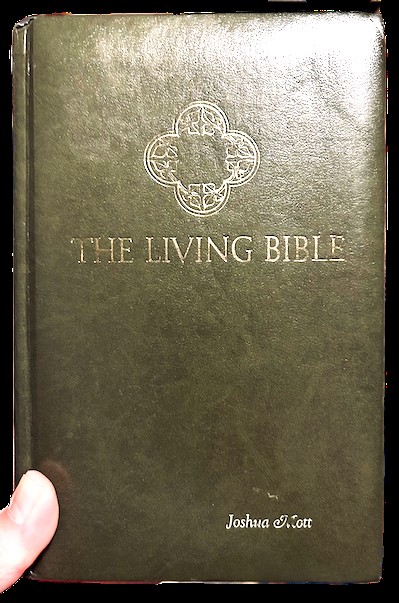
What is the TLB? The TLB was written by Kenneth Taylor. He found that his children didn’t follow the Bible text they used in his family’s devotions. As he travelled to work on the train, Taylor would paraphrase selections for his family and they understood it! In 1962, he started with the Epistles, publishing Living Letters. This volume was a dynamic paraphrase written in the common vernacular, communicating God’s Word to the common person. Its popularity was greatly enhanced by an endorsement by the late Billy Graham. He was recovering in a Hawaii hospital and read it during his recuperation. Graham was so impressed by the paraphrase that he ordered 50,000 copies to be given away on his TV broadcasts in 1972. In paraphrasing the Bible, Taylor used the American Standard Version of 1901. Over the next few years, he finished the Bible, publishing it in portions between 1962 and 1971. The TLB was popular, selling over 40 million copies worldwide. Taylor took the royalties he made from the TLB and gave them to charity. He started a company named after William Tyndale.
The New Living Translation
As the years went on, I started to read everything from the encyclopedia, the newspaper, and various books on John F. Kennedy and his assassination. The Bible was one of these books I read as I moved around with the military. Things started to change in the early 1990s. I realized the Bible was much more than a book on the shelf. I ended up at a Baptist church where I got saved (i.e., had a salvation experience), giving my life to Jesus. After this, I wanted to learn everything I could about the Bible.
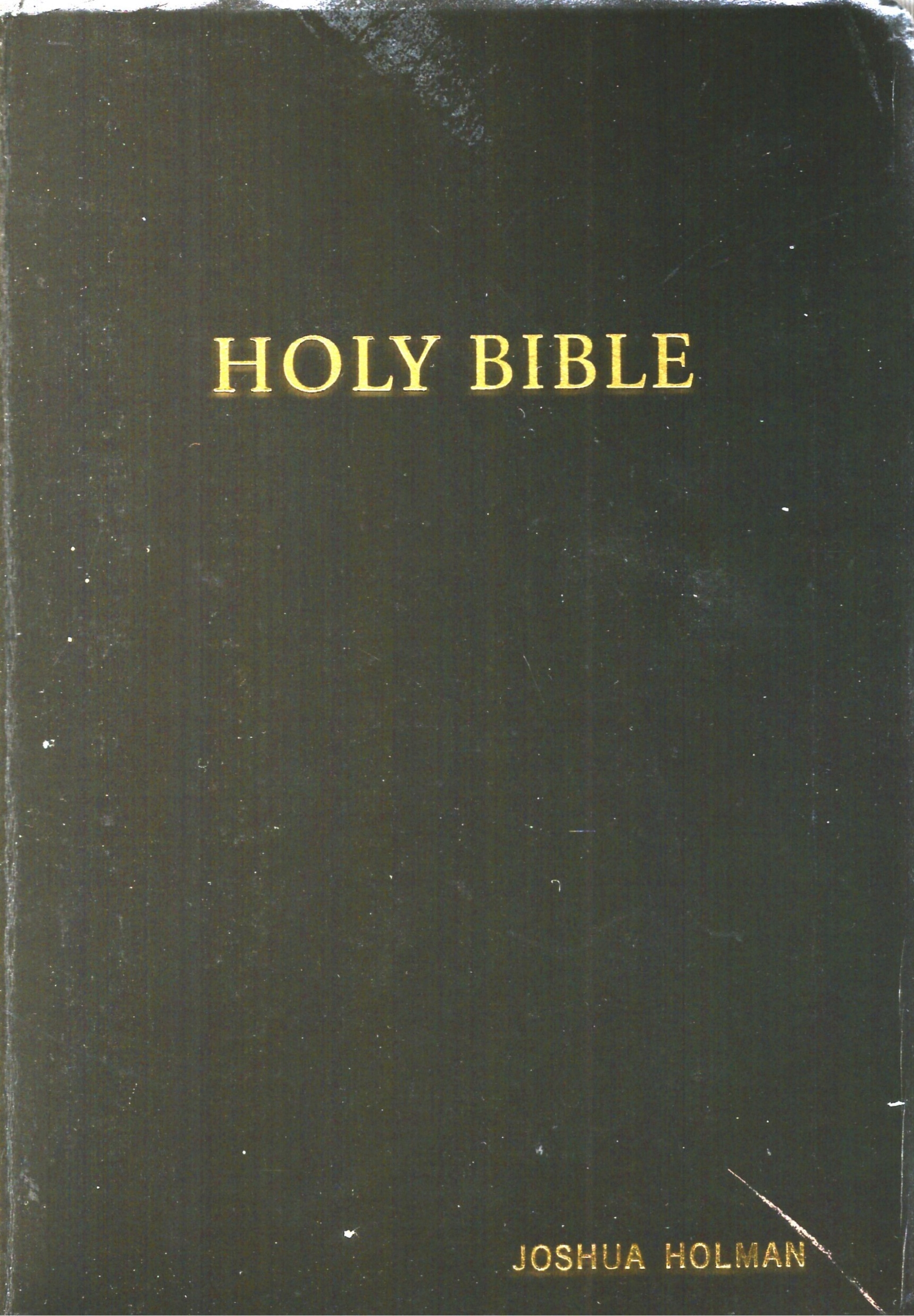
As a part of this effort, I read Christian magazines and found out about a new version called the New Living Translation (NLT). What is the NLT? The NLT is a translation from the Hebrew and Greek texts. Why the need for the NLT? By the late 1980s the TLB was losing sales to the New International Version. Around this time, Tyndale convened a committee to revise the TLB. The committee consisted of 90 evangelical scholars. They worked for seven years, starting in 1989. The NLT was released in July 1996. While Taylor used the American Standard Version of 1901 to produce the TLB, the NLT is a translation from Greek and Hebrew. It seeks to be a functional version that seeks to have the same impact on modern readers that the text had on its original readers. To guard against bias, the NLT was produced by scholars who were experts in a portion of the Bible. When I read this information in late 1996 and early 1997, I was excited. For my 17th birthday, I received a “gift and award” edition of the NLT (pictured to the left).
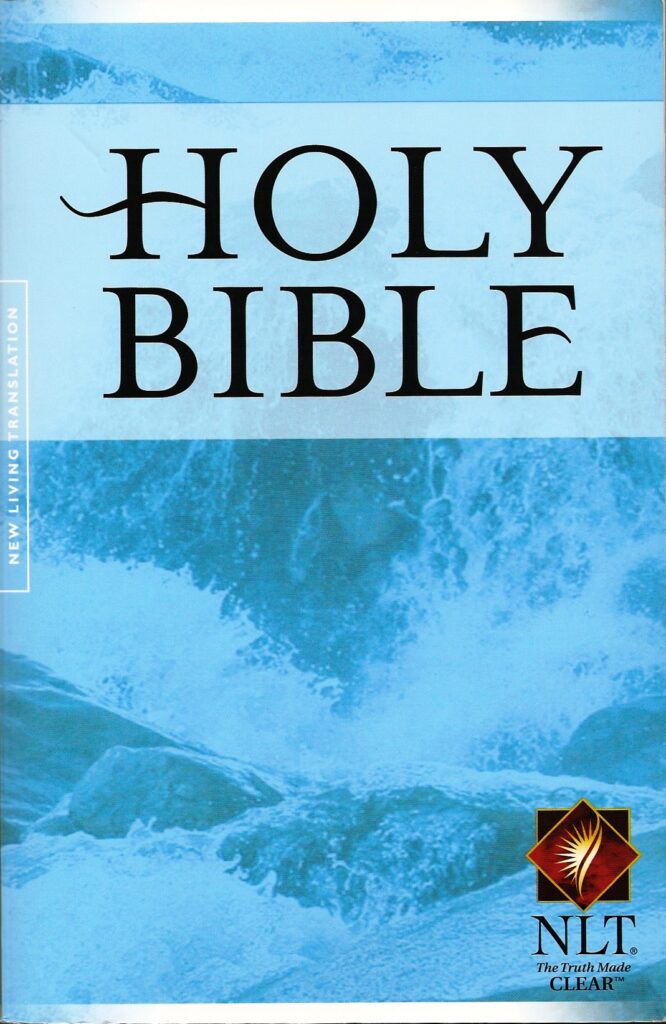
As before, life went on as I moved with the military. I moved on from the NLT, thinking it was just as bad as the TLB (I had moved on from the TLB by this point). I drifted away from church, too. In the early 2000s, I discovered the Bible on the internet. I found out there was a second edition of the NLT. What was the purpose of the project? It was intended to improve the precision and accuracy of the translation. The second edition text (pictured to the right) came out in 2004; further edits between 2007 and 2015 have improved the accuracy of the translation. Eventually I returned to church and an active Christian life. In the years since, I have used the NLT in all facets of the church. I use the NLT for worship services, devotions, teaching, and visiting people as part of my deacon ministry, for the most part.
The Catholic Editions of the TLB and NLT
Up to this point, my experiences have reflected a protestant, Baptist perspective. What about Catholics? While the history of protestant editions is well documented, the history of Catholic editions is the opposite. For the last decade or so, I have been on a quest to learn about the Catholic editions of the TLB and NLT.
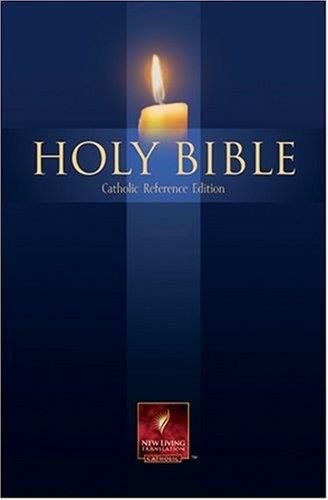
I first saw the Catholic edition of the NLT at a bookstore in 2002 (pictured to the left). This edition contained the 1996 text. As Marc has noted, this edition did not have the imprimatur. A few years ago, I saw a One Year edition of the Catholic edition of the TLB with an imprimatur (pictured below to the right). Until recently, Catholic editions of the TLB and NLT had the deuterocanonicals in a section after Revelation. The title page for January 1st stated that the deuterocanonicals were “paraphrased by [Father] Albert J. Nevins [,] Editor-in-chief and Corporate Vice President [of] Our Sunday Visitor, Inc.” After looking up biographical details on Fr. Nevins, I wrote two contacts, asking what resources he used in paraphrasing the deuterocanonicals. Our Sunday Visitor didn’t respond. I sent a letter to Tyndale, asking them this question.
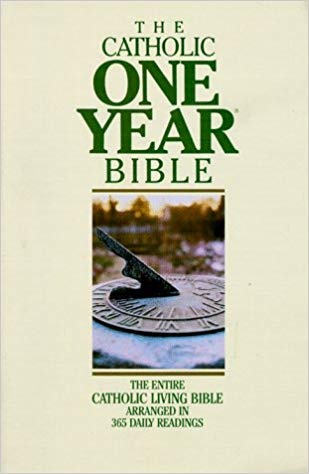
I received a gracious reply from Mark D. Taylor (son of Kenneth). He stated that he didn’t “have any record” of the “base text used by Fr. Nevins”. Mark went on, speculating Fr. Nevins used the 1970 NAB or 1966 RSV-CE. After the NLT-CE was published in India, I sent a tweet to the publisher, asking if the 2002 and 2016 texts were the same or a different translation. They replied, saying that the deuterocanonicals were “a new translation”. As I haven’t found any new information in the last few years, this has to be the final word.
Conclusion
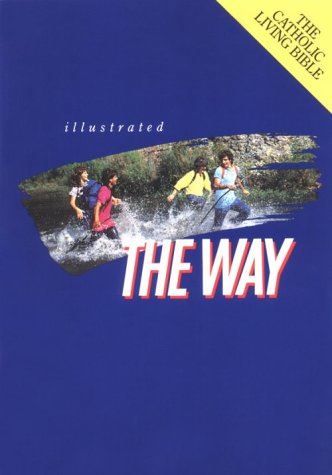
With this being said, a reader may wonder: what editions of the TLB and NLT are the best? For the TLB, I would recommend The Way (pictured below to the left). This is a youth edition of the TLB that was originally released in the 1970s. This edition was reissued in the late 1980s. I saw this edition at a bookstore a few years ago; I regret not getting it. The Way can be found on the Internet Archive; a user can read the Bible with an account.
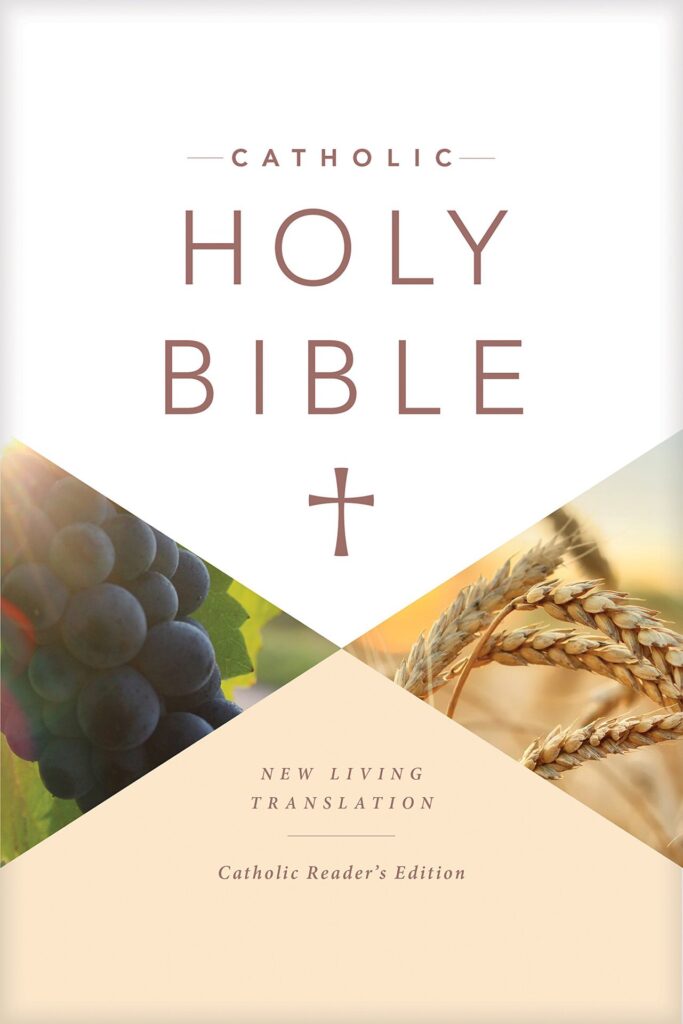
When it comes to the NLT, I recommend the 2017 Readers edition published by Tyndale (pictured to the right). I have the Kindle edition and I read from it. As I conclude this essay, I want to thank Marc for providing a platform for my reminiscences and research. More importantly, I’m thankful to God for providing one of many versions that every part of his church can use.